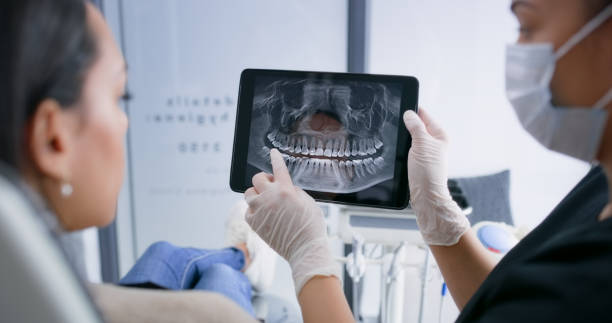
Whether it's one tooth or a full arch, Dental Implants in Irwin starts with a CBCT scan, not a guess. Smile Center Dentistry plans every case with 3D imaging before a single post goes in.
Osseointegration takes months either way — we'd rather spend an extra week planning than redo a placement. A surgical guide built from your own CBCT scan keeps the post exactly where the plan says it should go.
Every placement is performed or supervised by a licensed dentist with documented implant training, not a general practitioner learning on the job. Credentials are available on request, before you ever sit in the chair.
We use 3D cone-beam imaging to map bone density and nerve position before recommending a single-stage or two-stage approach. Nerve position is confirmed on imaging first, which is what keeps placement safe near the lower jaw.
You'll see the cost of the post, abutment, and crown broken out separately, not bundled into a vague estimate. Financing options are discussed at consultation if the full cost is a concern.
If your crown or abutment needs adjustment after placement, we handle it at no extra charge within the guarantee window. Ask about specifics before treatment — we'd rather you know upfront than discover it later.
Your treatment plan depends on bone density, tooth location, and how many teeth are missing.
A titanium post replaces the root, topped with a custom crown shade-matched to your surrounding teeth. Healing time is discussed upfront, typically three to six months before the final crown.
A bridge anchored to implants avoids grinding down healthy adjacent teeth the way a traditional bridge would. We explain the trade-offs between this and single implants before you decide.
A full arch of replacement teeth can be supported on as few as four strategically placed implants. This option is discussed in detail with realistic timelines, not a same-day promise that overstates recovery.
When a CBCT scan shows insufficient bone density, grafting rebuilds the site before an implant can be safely placed. We walk through healing time for grafts honestly, since it adds months, not days.
Implants don't get cavities, but the surrounding gum tissue still needs monitoring for peri-implantitis. We build these checks into your recall schedule automatically.
Not every case qualifies for a same-day temporary — bone quality and bite force both factor into that decision. We'll tell you honestly at your consult whether your case is a candidate.
We ask a few quick questions by phone to flag anything that needs extra attention at your consult.
You'll see your own scan on screen while we explain exactly what it shows.
We lay out single-stage vs. two-stage placement, grafting needs if any, and itemized costs before you commit.
The implant post is placed, allowed to integrate with the bone, then topped with your custom crown, bridge, or arch.
"Lost a molar years ago and finally did the implant. The CBCT scan they showed me made the whole process make sense."
"Four implants supporting my whole upper arch, and they told me realistic healing times instead of a rushed promise."
"The crown they matched to my implant is honestly indistinguishable from my real teeth."
"Itemized quote for the post, abutment, and crown separately — I actually understood what I was paying for."
"Surgical guide made from my CBCT scan — they showed me exactly where the post would go before the procedure."
Most single-implant cases run three to six months total, including healing time before the final crown. A rushed timeline is how implants fail, so we build in the time bone actually needs.
Low bone density doesn't automatically disqualify you; it usually just adds a grafting step before placement. Grafting adds time but often makes the difference between a stable implant and a failed one.
Cost depends on how many teeth are missing and whether grafting is needed — we give itemized pricing at your consult, not a vague range. We'd rather walk through the numbers together than have you guess at a website estimate.
We discuss sedation choices at your consult so you're comfortable with the plan going in. Post-procedure soreness is normal for a few days and manageable with standard pain relief.
Implants still need daily brushing and flossing, plus regular checkups to monitor the surrounding gum tissue. We show you specific cleaning techniques for around the implant at your follow-up visit.
Coverage varies widely by plan; we check yours and explain what's likely covered before you commit. Verification happens before treatment starts, not as a surprise on your final invoice.
Our implant team serves Irwin and the surrounding zip codes, so nearby residents don't have to travel far for 3D-guided planning. New patients researching implants for the first time are welcome to ask questions before committing to a scan.
We'll tell you honestly whether you're a good candidate before you spend a dollar.
Call +1-866-227-2801